All university challenges have now taken place. You can explore the related news stories on our News page
Offshore renewable infrastructure must develop in a way that does not harm the marine environment, and where possible, contribute to European restoration goals. Recent years have seen an increase in measures aimed at mitigating negative effects of infrastructure development (i.e. mitigation measures), enhancement, or restoration of certain natural habitats (i.e. nature-inclusive designs).
Several initiatives have explored nature-inclusive designs for bottom-fixed offshore wind farms, and similar efforts are now beginning for floating wind farms as well. However, there is still a considerable gap in sustainable design strategies for both fixed and floating offshore wind infrastructure in European waters, and worldwide. This presents an opportunity to develop innovative, interdisciplinary solutions that help reconcile sustainable energy development with the protection and recovery of marine ecosystems.
In this University Challenge we seek to create concepts that can be integrated into offshore renewables or related infrastructure (such as the connecting grid or subsea platforms) that not only minimise environmental impact but also support ecosystem functioning and protection. These concepts might include nature-inclusive design (NiD) principles, or mitigation measures tailored to specific ecological needs.
To succeed, your group will need to:
• Address ecological challenges linked to offshore renewables.
• Demonstrate the technical and structural feasibility of your concept.
What is in it for you?
• An exclusive experience award, including a trip to WindEurope 2026 in Madrid.
• The opportunity to further develop your concept, including through credited university courses*.
• The chance to have your idea included in the NiD4OCEAN Open Challenge
* Upon consultation with the coordinator of the challenge at the student’s home university.
In recent years, there has been a considerable increase in mitigation measures and nature-inclusive designs for bottom-fixed offshore wind infrastructure 1 2 3 4 5, including measures associated with underwater noise, disturbance and displacement, and solutions designed to optimise scour protection and cable protection layers, add-on structures and stand-alone units 6 7 8.
Attempts for floating structures are scarcer, and so far, pilot projects have focused on add-on structures within the floating platforms 9. Both fixed and floating turbines, along with associated infrastructure, cause impacts on the local marine environment (e.g. wildlife entanglement, continuous chain dragging on the seabed, anchor impacts).
Nature-inclusive concepts offer alternatives for mitigating the negative effects of infrastructure development (i.e. mitigation measures) or for enhancing or restoring certain habitats (i.e. nature-inclusive designs). As an emerging field, there are still many gaps to explore and challenges to address, particularly in integrating multiple disciplines such as engineering, biology, and others.
We invite students (bachelor, master and PhD students) to think outside the box and present concepts that address nature inclusive concepts for offshore renewables. The target area and focus area will vary among each regional challenges. Four challenges will be performed in 2025, organised by the following universities, in collaboration with the NiD4OCEAN consortia:
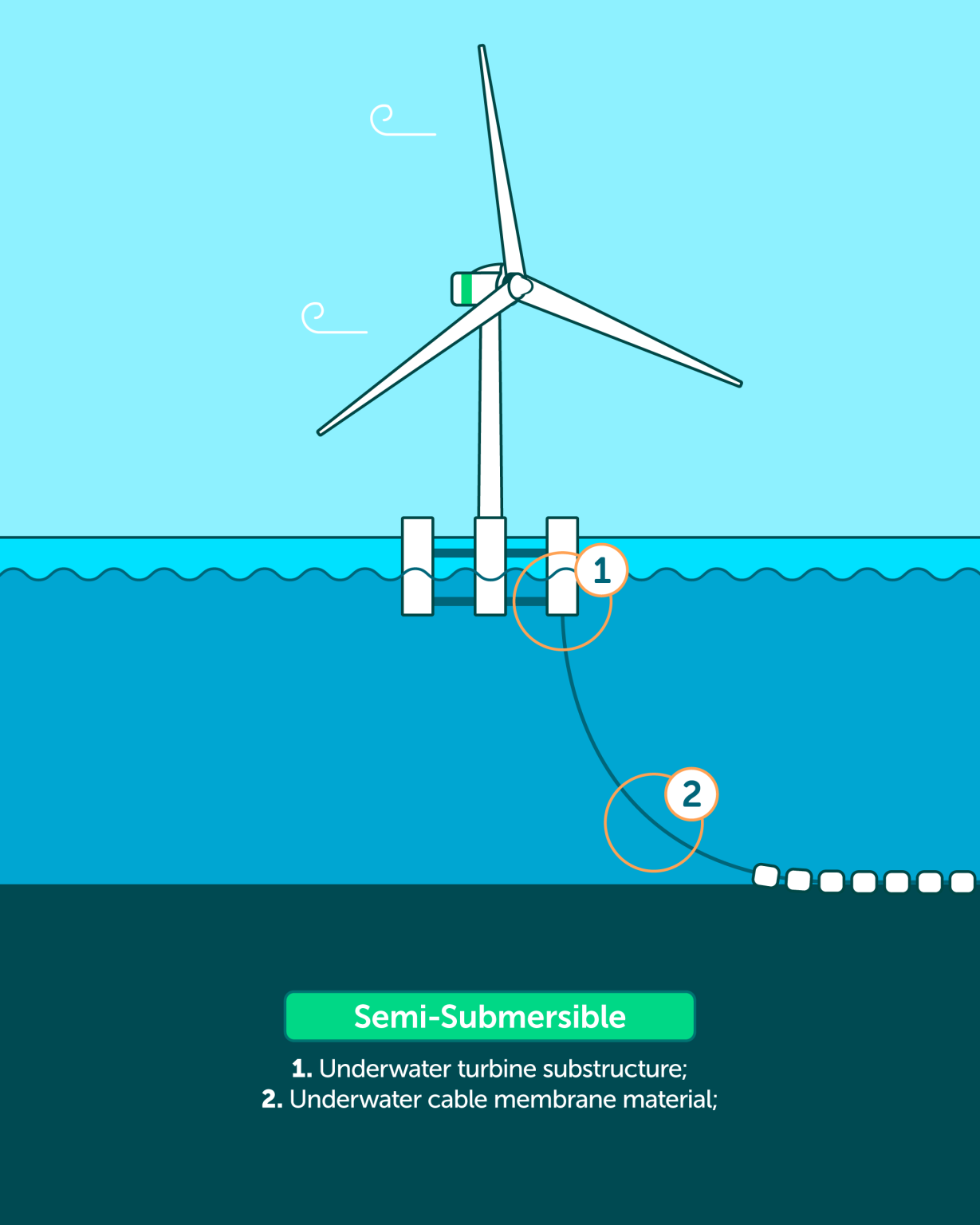
Students are challenged to develop innovative, nature-inclusive concepts for floating offshore wind implemented within offshore wind farms or the related infrastructure (e.g. connecting grid, subsea platforms) in designated areas in Norway.
Project should target:
At the University Challenge at UiA, participants will work for two days in interdisciplinary teams, guided by experts from NiD4OCEAN (UiA, NIVA, DTU-Aqua, and Equinor). Free meals and inter-campus transportation (Kristiansand-Grimstad) will be provided.
Possible concept areas include, but are not limited to:

Awards and opportunities:
Exclusive experience award, including a trip to WindEurope 2026 in Madrid
Possibility of submitting the concepts to the Open challenge
UiA students have the chance to develop their ideas though credited courses e.g. Students in Research courses (e.g., BYG314).
When: from August 22nd (13:00) until 23rd (20:00)
Where: UiA Grimstad Campus
Registration and more information: https://www.uia.no/english/studies/for-students/courses-and-guidance/events/innovation-challenge.html
Students are challenged to develop innovative, nature-inclusive concepts for Floating Offshore Wind Turbines (FOWT) focusing on the reuse of anchorage systems and mooring chains to foster marine biodiversity in the Gulf of Lion (Western Mediterranean Sea).
The target is to design concepts that:
The Innovation Challenge at UPC will last for a week, including different sessions. They will be encouraged to work in multidisciplinary teams, guided by experts from UPC, ICM-CSIC, and industry partners such as X1Wind and IREC. The challenge will be held in person at UPC’s North Campus of Barcelona, and students from all engineering schools will be invited to participate.
The scope of the concepts can include but is not limited to:
Apart from the exclusive experience award, including a trip to WindEurope 2026 in Madrid, and the possibility of submitting the concepts to the Open Challenge, UPC students have the opportunity to connect with research and industry networks, and to further develop their ideas through innovation and entrepreneurship support from the UPC Innovation Management Unit (SGI).
When: from October 6th until October 13th
Where: UPC Campus Nord, Barcelona
Students are challenged to develop innovative, nature-inclusive concepts that explore how floating offshore renewable energy systems can coexist with marine ecosystems. The focus is on reducing environmental pressures while enhancing ecosystem functioning through thoughtful design, reuse of infrastructure, and mitigation of key impacts such as underwater noise and seabed disturbance.
The challenge “Rethinking Co-existence of Floating Offshore Energy and Nature”, a collaboration between DTU Aqua, DTU Skylab, and several other partners, is part of the traditional Open Innovation Challenge, Copenhagen’s flagship student innovation challenge for sustainable change which brings together over 120 students, researchers, and sustainable innovation enthusiasts.
Apart from NiD4OCEAN team and challenge committee, representatives from Equinor and DHI also comprises the jury to select a winner concept.
When: from September 30th until October 3rd
Where: KU Library, DTU Skylab & CSE
Students are challenged to develop innovative, nature-inclusive concepts that both mitigate the environmental impact of wind farms and support the marine ecosystems of the Baltic Sea through habitat restoration, the creation of new habitats, and the enhancement of overall ecosystem functioning.
The Innovation Challenge at KU will last for a week, including different activities aiming to Engage. Investigate. Act.
Participants will be encouraged to work in multidisciplinary teams, guided by researchers of marine biology, ecology, engineering, knowledge transfer experts from Klaipeda University, industry partners from “Ignitis Renewables” and NiD4OCEAN project consortium.
The challenge will be hosted at Marine Research Institute of Klaipeda University, and students from all faculties and disciplines and from the partnering institutions will be invited to participate.
The scope of the concepts can include but it is not limited to:
When: at the beginning of October 2025 (weeks 41-42)
Where: Marine Research Institute of Klaipeda University
Experts supporting the regional challenges and serving on the judging panel will vary between regions. The expert judging panel will include members from the university leading the challenge, as well as representatives from the NiD4OCEAN consortium, comprising developers, contractors, and research institutes with expertise spanning marine ecology, structural engineering, offshore wind farm development, construction, and maintenance.