Innovators Making Waves: Nature-Inclusive Concepts for Floating Offshore Wind marked the final stage of the NiD4OCEAN Innovation Challenge Series. Held on 21 April 2026 as a side event at the WindEurope Annual Event in Madrid, it brought together university students, SMEs, researchers, wind industry representatives and environmental experts to showcase novel concepts and discuss how Nature-Inclusive Designs (NiDs) for floating offshore wind can move from ideas to pilot projects, as well as the opportunities they bring and the main barriers they face.
How can floating offshore wind infrastructure be designed to better interact with marine ecosystems and what are the challenges and opportunities of integrating Nature-Inclusive Designs (NiDs)?
These questions guided Innovators Making Waves: Nature-Inclusive Concepts for Floating Offshore Wind, the final stage of the NiD4OCEAN Innovation Challenge Series. Held on 21 April 2026 as a side event at the WindEurope Annual Event in Madrid, the session brought the challenge journey into a public forum, connecting student ideas, SME concepts and expert perspectives on the future of Nature-Inclusive Design in floating offshore wind.
The Innovation Challenge Series began with a simple but ambitious purpose: to encourage new nature-inclusive concepts for offshore renewable energy infrastructure. Across the first two stages, that purpose took different forms. University students in Denmark, Lithuania, Norway and Spain worked on concepts shaped by their own regional contexts, while SMEs and start-ups responded to an open call for floating offshore wind and grid infrastructure. By the time participants gathered in Madrid, these ideas had moved from separate challenge settings into one shared conversation.

During the event, the conversation started by exploring why innovation on Nature-Inclusive Design is critical today. Floating offshore wind is developed in a changing ocean, and the ecological context is not the same in every sea basin. One of the key takeaways from the opening presentations was therefore that different seas have distinct ecologies, each requiring tailored Nature-Inclusive Designs. The session also clarified an important distinction: while mitigation measures aim to reduce or minimise negative impacts, Nature-Inclusive Designs focus on creating optimised artificial habitats to enhance selected biodiversity assets.
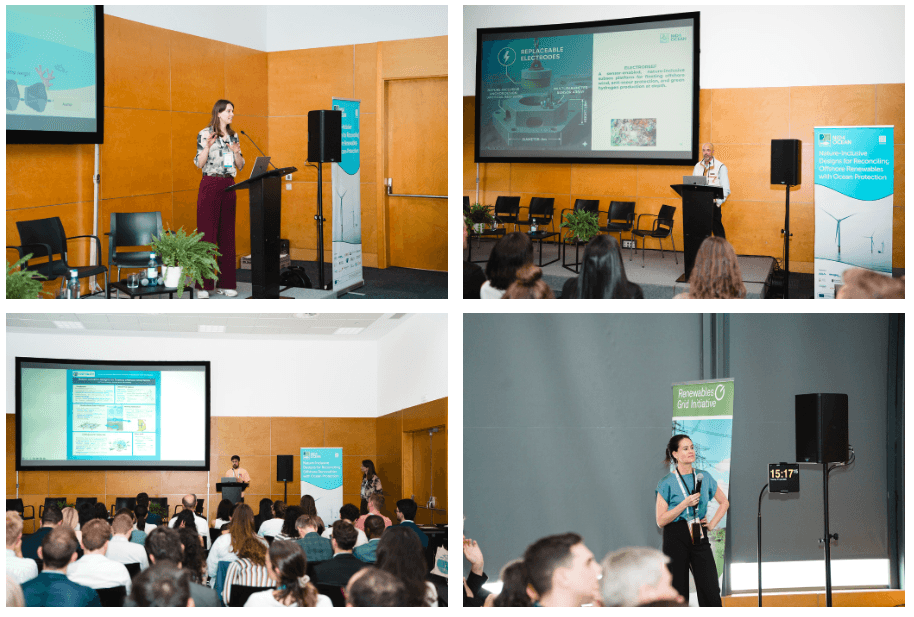
From there, the focus turned to concepts. The first talks showcased ideas from SMEs and related innovation work, moving the discussion from the general need for innovation to concrete approaches for floating offshore wind infrastructure:
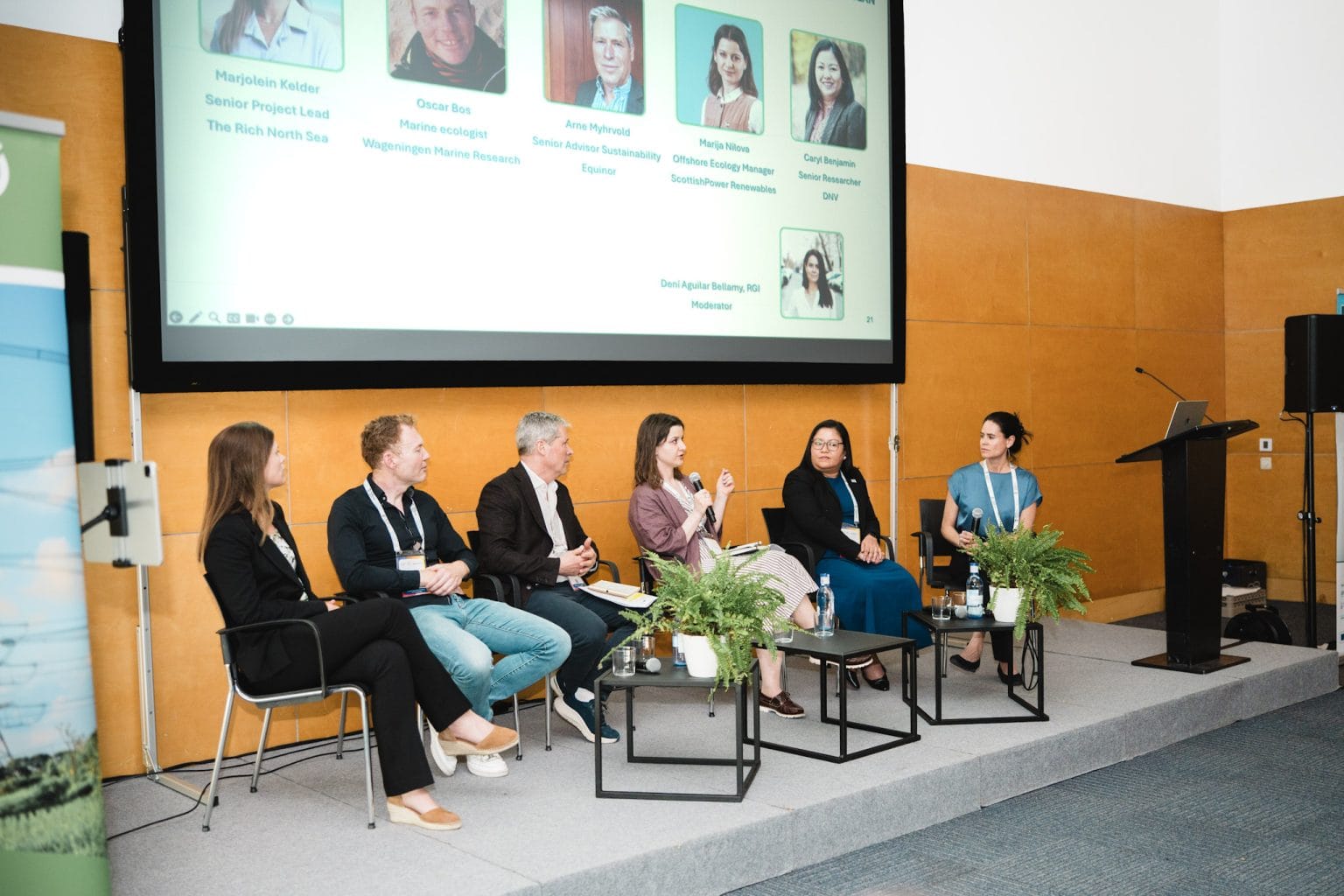
These presentations raised a central question: What will it take to put such concepts into practice? A panel discussion brought together perspectives from The Rich North Sea, Wageningen Marine Research, Equinor, ScottishPower Renewables and DNV, moderated by the Renewables Grid Initiative. The discussion framed Nature-Inclusive Design not as a finished solution, but as an emerging field requiring further evidence, testing and guidance.
Several challenges came into focus. Panellists highlighted uncertainty around the long-term ecological outcomes of Nature-Inclusive Designs, their ability to deliver net positive biodiversity impacts, and the number and scale of designs required to benefit target species. They also pointed to the specific difficulties of floating environments, including water depth, reduced light penetration, dynamic structures such as cables and floaters, monitoring in remote offshore locations, and questions about what happens to created habitats after decommissioning. Alongside these technical and ecological uncertainties, the conversation also raised the lack of standardisation and clear guidance for developers who are increasingly expected to demonstrate measurable biodiversity benefits.
Yet, the discussion also showed why the field is worth advancing. Existing experience from bottom-fixed offshore wind can provide a starting point, current standards still leave room for flexibility and innovation, and static or semi-static components such as anchors, seabed frames and substations may offer promising areas for further development. Monitoring remains challenging, but there is already experience and ongoing technological innovation to build on. In other words, uncertainty was not presented as a reason to stop, but as a reason to test, learn and improve.
The student lightning talks placed the idea of learning-by-doing at the core of the challenge series. Thirteen students from four eco-regions presented concepts developed through the regional University Innovation Challenges, showing how regional ecological and technological contexts had shaped their thinking:
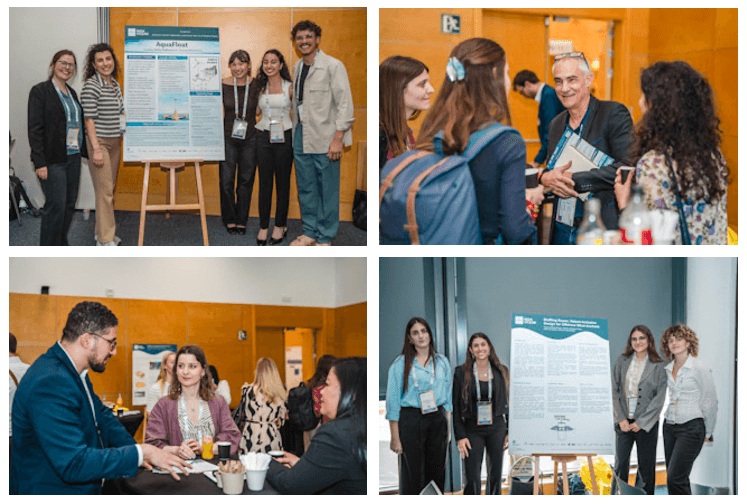
After the presentations, the exchange continued through networking and poster presentations. This gave participants the chance to speak directly with the innovators behind the concepts, ask questions and connect across research, industry and policy communities. More than 100 participants attended, including wind developers, transmission system operators, SMEs, consultancy companies, researchers and university students from across Europe.
What emerged from the day was not a single answer, but a clear direction. Nature-Inclusive Design for floating offshore wind is an emerging field, but requires stronger scientific evidence, practical testing, monitoring approaches and clearer pathways for implementation. For that reason, one of the main outcomes was that innovation, testing and pilot projects are the most viable way forward, an approach that aligns directly with the objectives of NiD4OCEAN.
The next steps of the project build on this direction. NiD4OCEAN is working on a roadmap for innovative designs addressing ecological, socio-economic and sociopolitical challenges; a region-specific decision support tool for deploying Nature-Inclusive Designs; recommendations towards standards for selection and monitoring; and co-design recommendations, requirements and a toolkit to reconcile offshore wind development and restoration policies.
By bringing together early-stage student ideas, SME innovation and expert discussion, Innovators Making Waves showed how the Innovation Challenge Series has helped open a wider conversation on Nature-Inclusive Design for floating offshore wind, and why continued testing, collaboration and evidence-building will be essential for the field to move forward.