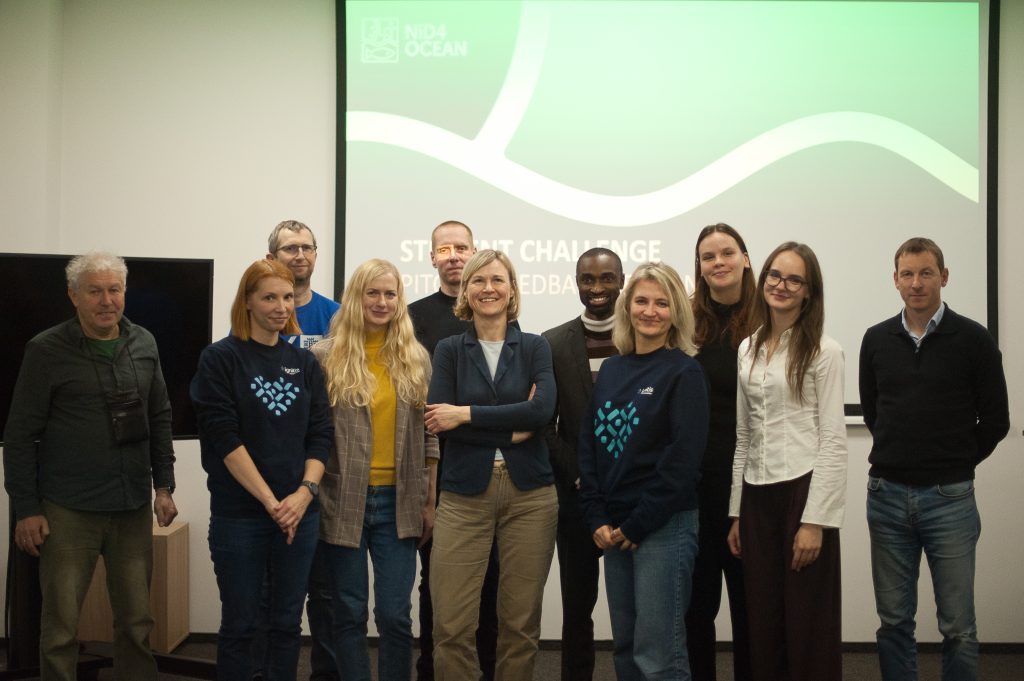
The last of the NiD4OCEAN University Challenges took place in Klaipėda, Lithuania, from 15 to 30 October 2025. Hosted by the Marine Research Institute of Klaipėda University, the event brought together 20 students from diverse study programmes, including Biology and Marine Biotechnology, Geography and Oceanography, Recreation and Tourism, and Ship and Port Engineering at Klaipėda University, as well as a group of Electrical Engineering students from Vilnius Tech University.
Students collaborated in multidisciplinary teams to develop nature-inclusive design solutions (NiDs) addressing the key question: “How can offshore wind expansion be reconciled with nature conservation?”
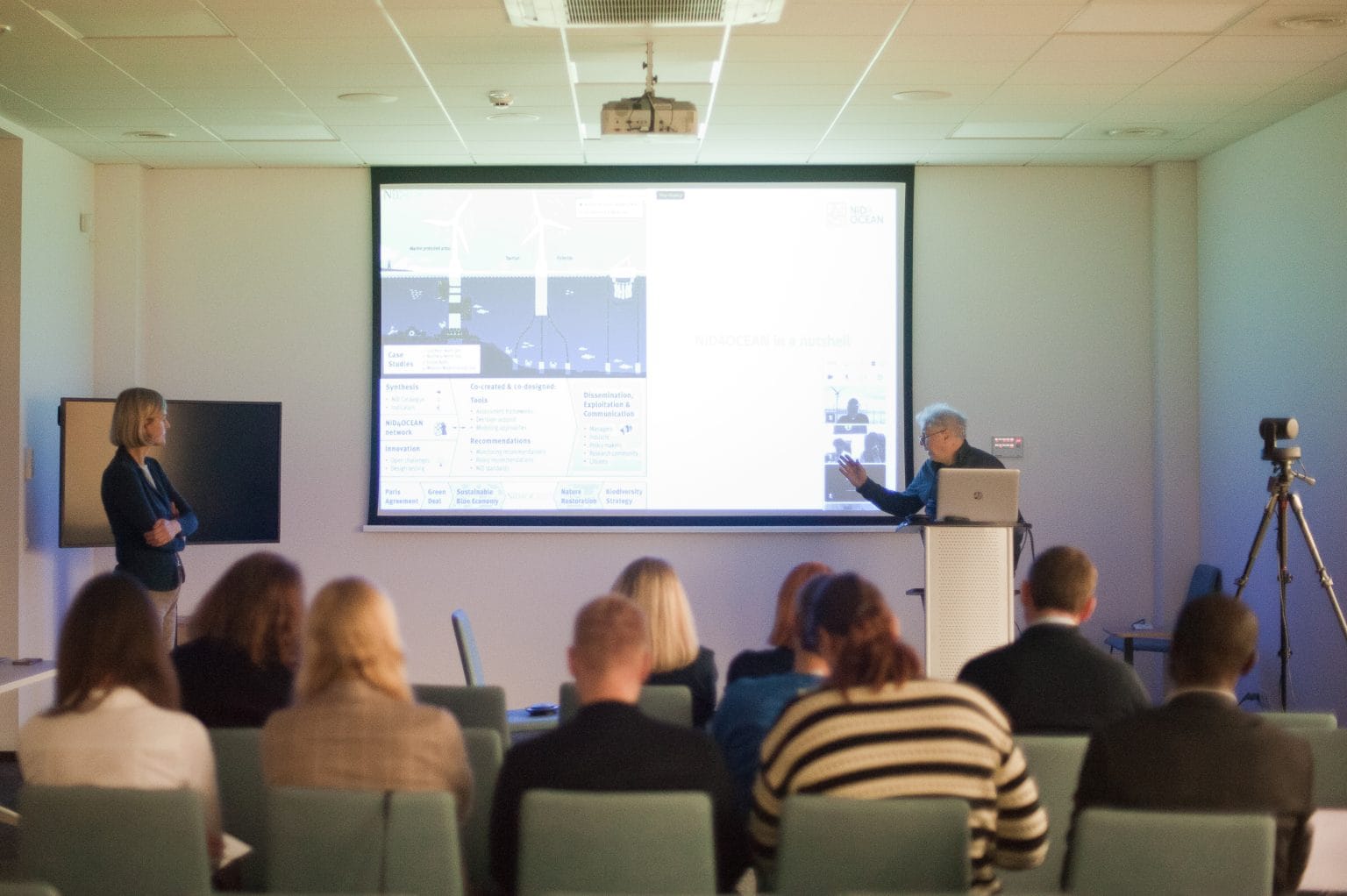
During the introductory session, NiD4OCEAN professors from the Marine Research Institute, Dr Darius Daunys and Dr Artūras Razinkovas-Baziukas, together with environment and permitting project managers Agnė Lukoševičienė and Laura Lauciūtė from the offshore wind development company Ignitis Renewables, provided background information for the challenge. Dr Viktorija Vaitkevičienė, who engaged students using the Challenge-Based Learning method moderated the event.
Over two weeks, four interdisciplinary teams worked intensively to develop creative, nature-inclusive concepts for offshore energy systems in the Baltic Sea. Guided by experts from both academia and industry, the teams proposed a range of innovative ideas, including solutions to reduce bird collisions with turbine blades, concepts to support underwater ecosystems using artificial lighting, and approaches to minimise noise during turbine installation and operation.
Following the final pitch session, a jury comprising representatives from Ignitis Renewables, the Coastal Research and Planning Institute, and researchers from Klaipėda University, including marine biologist Dr Andrius Šiaulys and marine engineer Dr Rima Mickevičienė, selected the winning team. Their eco-engineering concept integrates fixed-bottom offshore turbines with modular, 3D-printed artificial reefs tailored to Baltic Sea conditions, aiming to create a balance between clean energy production and marine ecosystem health.
The winning team will join peers from university challenges in Norway, Spain, and Denmark to present their concept at WindEurope 2026 in Madrid.