
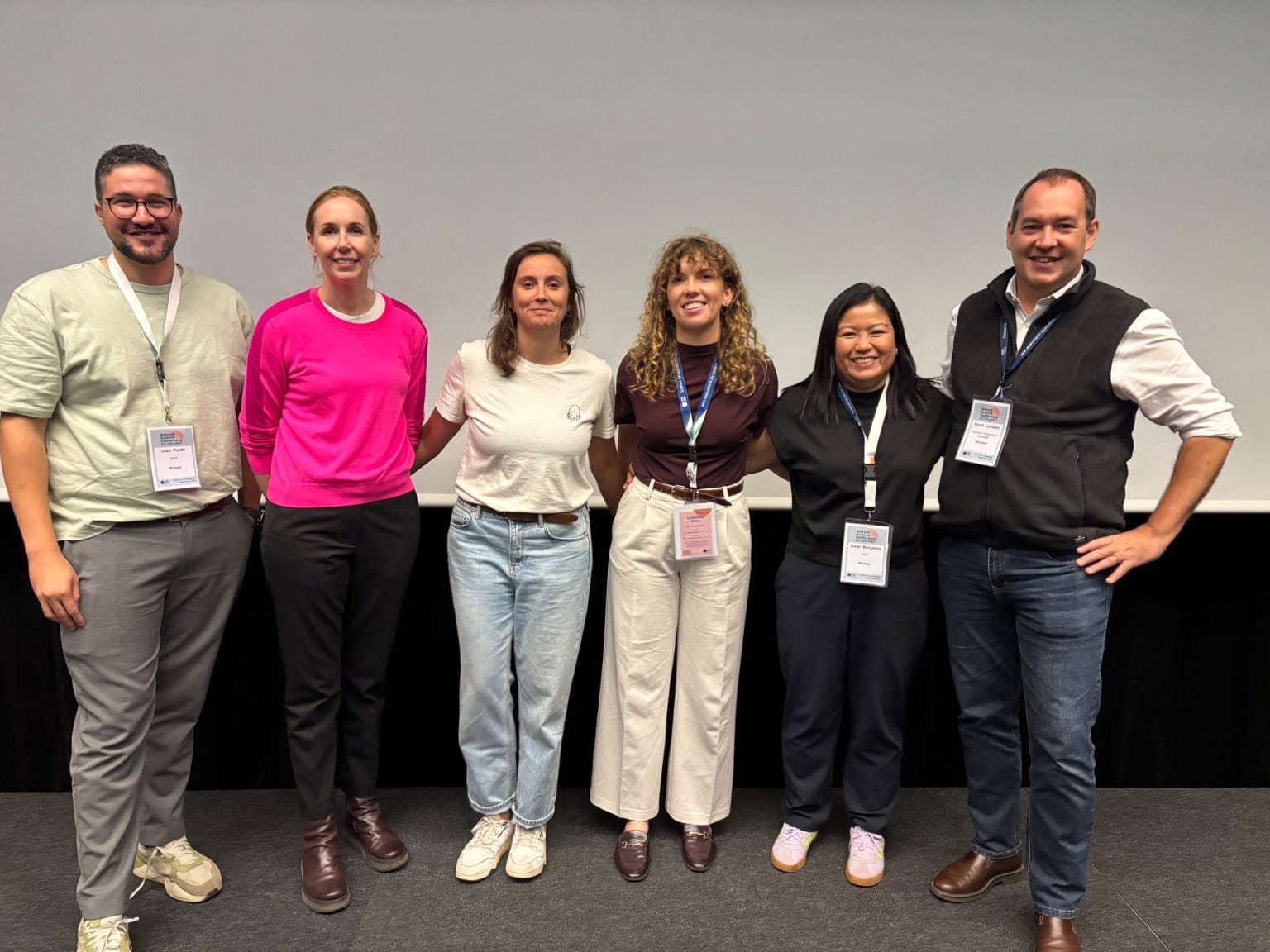
From 15 to 18 September 2026, some of the NiD4OCEAN partners joined marine scientists, policymakers and industry representatives from around the world at the ICES Annual Science Conference (ASC) 2026, hosted at Le Quartz – National Stage in Brest, France.
The conference is ICES’s flagship annual event, bringing the global marine science community together to share research and build new collaborations around ecosystem science, human impacts, emerging technologies and conservation.
NiD4OCEAN’s research was shared through four communications:
- Clémentine Mitoyen, CSIC – Life trait analysis of offshore-wind stressors sensitivity and Nature-inclusive Design effectiveness by expert evaluation (oral presentation)
- Anne Cathrine Linder, DTU – Quantifying pathways from turbines to ecosystems in EU marine policy; policy mapping of and Nature-inclusive Design for offshore renewable energy (oral presentation)
- Juan Pardo, NIVA – Assessing the ecological contribution of nature-inclusive designs (NiD) in offshore wind: challenges in defining & evaluating “net positive” outcomes (poster presentation)
- Ellen Johannesen, NIVA – How not to do social equity assessment for NiDs in offshore wind (poster presentation)
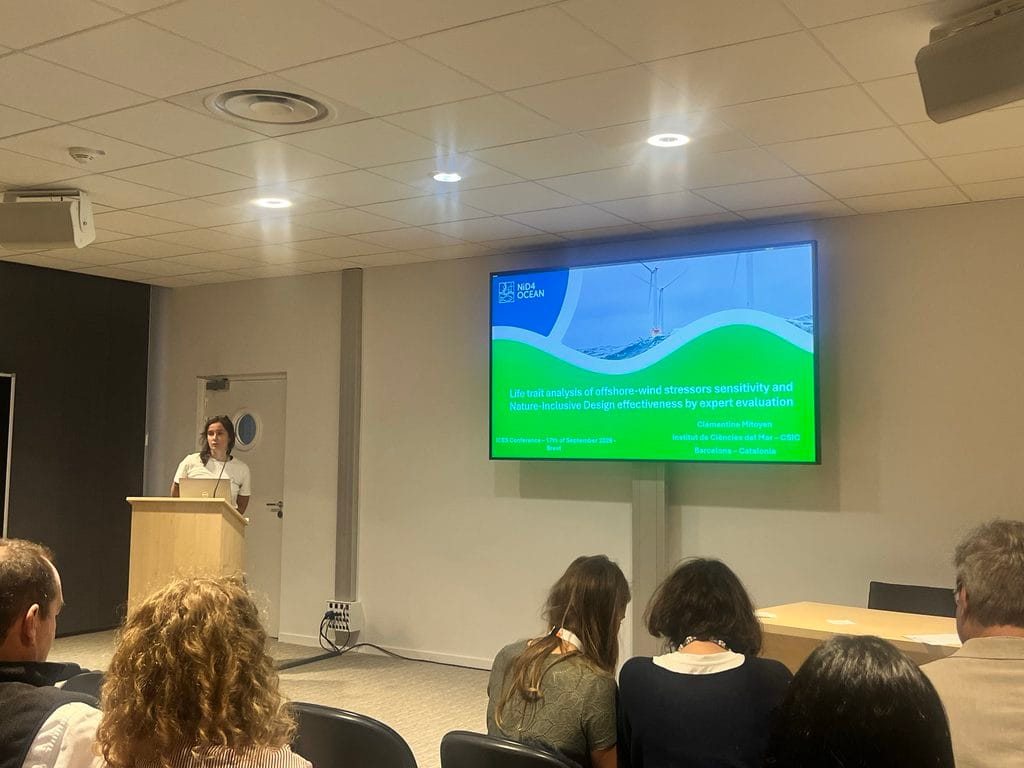
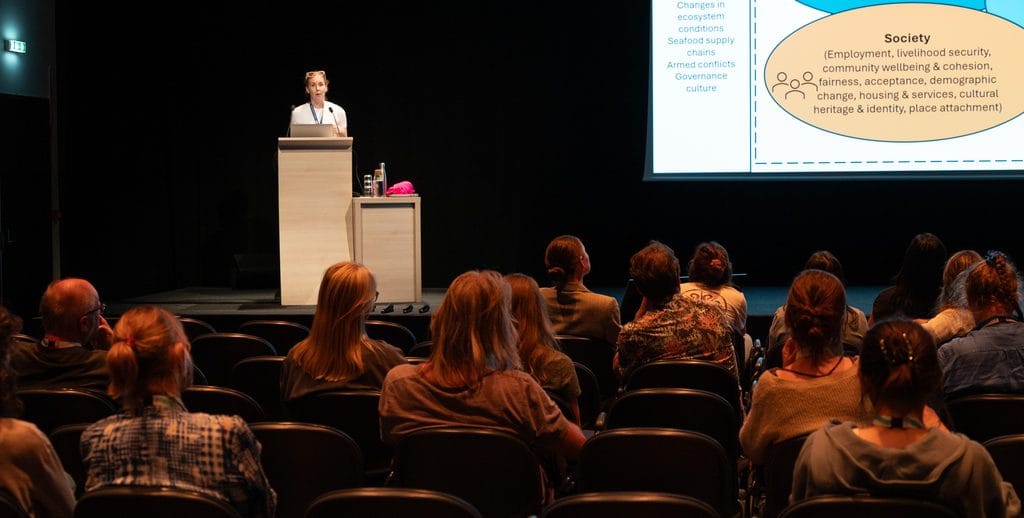
The highlight of the week: a Network Session on the trade-offs of Nature-Inclusive Designs
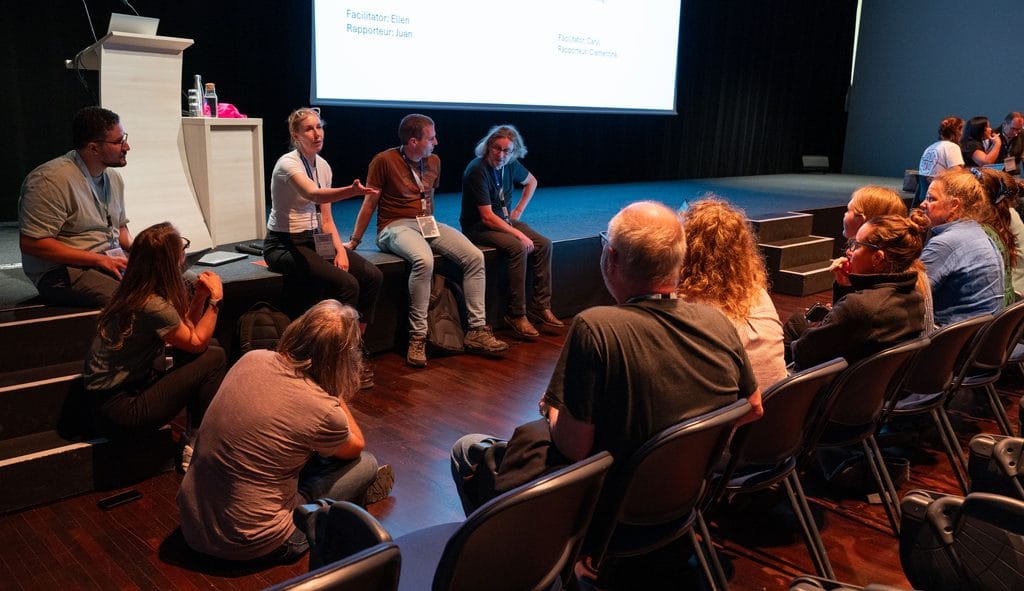
The centerpiece of NiD4OCEAN’s week in Brest was a Network Session the project convened. It was titled “Evaluating the trade-offs of Nature-Inclusive Designs for offshore wind in Europe.” The session opened a discussion on whether offshore wind expansion can meet Europe’s climate goals while protecting marine life and coastal communities. It brought together scientists, policymakers and industry to explore nature-inclusive design, weigh its ecological and socio-economic trade-offs and help shape best practices for a nature-positive energy transition.
The session brought together around 30 participants. Most were natural and interdisciplinary scientists, alongside social scientists, industry representatives and a policymaker. After a short introduction to nature-inclusive designs (NiDs), participants split into two facilitated discussion groups. They tackled two linked questions: where are the weakest links in how we currently approach NiDs and how do we measure what actually matters.
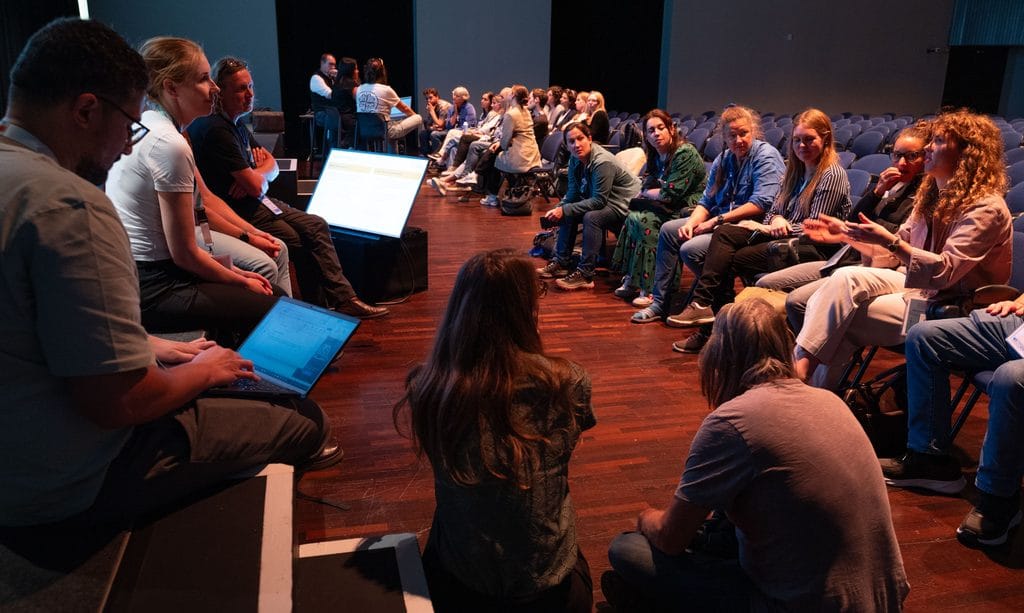
The two groups arrived at strikingly similar themes, despite starting from different angles. Here’s what came out of it.
There is no single “right” way to do NiDs
The clearest point of agreement throughout the session was this: the conditions needed to scale-up and implement nature-inclusive design in offshore wind are still in flux. What is needed instead is a combination of measures, shaped by the ecological, spatial, regulatory, and socio-economic context of each site. Although it might sound like a modest conclusion, there is a risk of standardising too quickly without scientifically grounded information, in a policy space that is still moving fast.
Definitions matter more than they might seem to
The most frequently raised issue in the room was the lack of clear, agreed definitions. Several offshore wind tenders already reference NiDs without specifying what that actually means or requires. This opens the door to greenwashing. Participants were clear that terms like restoration, mitigation and enhancement need to be distinguished. NiDs also need to be clearly separated from related but different concepts, such as nature-based solutions or marine spatial planning. This is not only a scientific challenge but also a political and societal one that needs to be anchored in regulation.
What counts as “success” depends on where you are
Discussions on baselines exposed an unresolved question that runs through the whole field. What state are we actually trying to return to, and how do we know if we have succeeded? The answer looks different in the Baltic, the North Sea and the Mediterranean. Participants stressed an important distinction between restoring something that was there before and creating something new. The latter brings its own risks. Whatever baseline is chosen, the reasoning behind it needs to be explicit and tied to local conditions.
Monitoring should follow the goal and look beyond the turbine
If the aim of an NiD is more biodiversity or more of a specific species, that goal should define what gets measured. But scale matters. Seeing more marine life cluster around a structure does not necessarily mean a given population has grown. It might just mean it has moved. Monitoring needs to happen at multiple spatial scales to tell the difference. Participants also floated some practical ideas. These included reusing inspection images industry already collects, potentially with AI-assisted recognition and folding NiD monitoring into existing fisheries surveys where possible. Rather than chasing full standardisation, the priority should be data that is high-quality, transparent, and comparable.
Decommissioning raises a genuinely philosophical question
Should structures be fully removed at the end of a wind farm’s life? Or should parts that have developed real ecological value, like scour protection that has become a reef, be left in place? The session did not land on one answer. But it did surface an interesting way of framing the choice. Are we acting as gardeners of an ecosystem or restorers of a previous one? Science can inform that decision, but it cannot settle it alone. What is clear is that some ecological benefits do not necessarily disappear even after decommissioning. Oyster larvae dispersing to surrounding habitats is one example.
Industry wants certainty. Policy wants evidence.
Participants agreed that industry has a genuine interest in demonstrating environmental responsibility. But it needs clearer regulatory expectations to act on it. Mechanisms like environmental compensation funds and monitoring incentives were discussed as promising, provided they are carefully designed. Industry’s environmental responsibility also needs to stay anchored in avoiding and minimising harm first, before compensation or enhancement come into play.
NiDs are a complement, not a solution
The session closed on an important caution. NiDs must not be presented as a general fix for the environmental impacts of offshore wind. They sit within a broader mitigation hierarchy. They cannot substitute for avoiding and minimising impacts in the first place.
Where this leaves us
NiDs need clear, shared definitions, anchored in regulation, and baselines that are explicitly justified for each region.
Monitoring design should follow each NiD’s specific goal and look beyond the wind farm itself, reporting ecological function alongside species counts, with better data access and comparability between monitoring programmes.
Decommissioning and partial removal should be considered from the start of NiD design, not left as an afterthought. Incentives that reward monitoring and evidence matter too, as long as they include safeguards against greenwashing.
Failures should be documented as openly as successes and adaptive management should be the default when outcomes are uncertain. NiDs should stay firmly within the broader mitigation hierarchy, rather than standing in for it.
No single factor limits progress in this field. Different barriers apply at different stages, and continued dialogue between science, industry, policymakers and society will be key going forward. Sessions like this one, and the wider ICES community working across the biological, environmental and social dimensions of offshore renewables, offer exactly that kind of venue.
A valuable exchange for the project
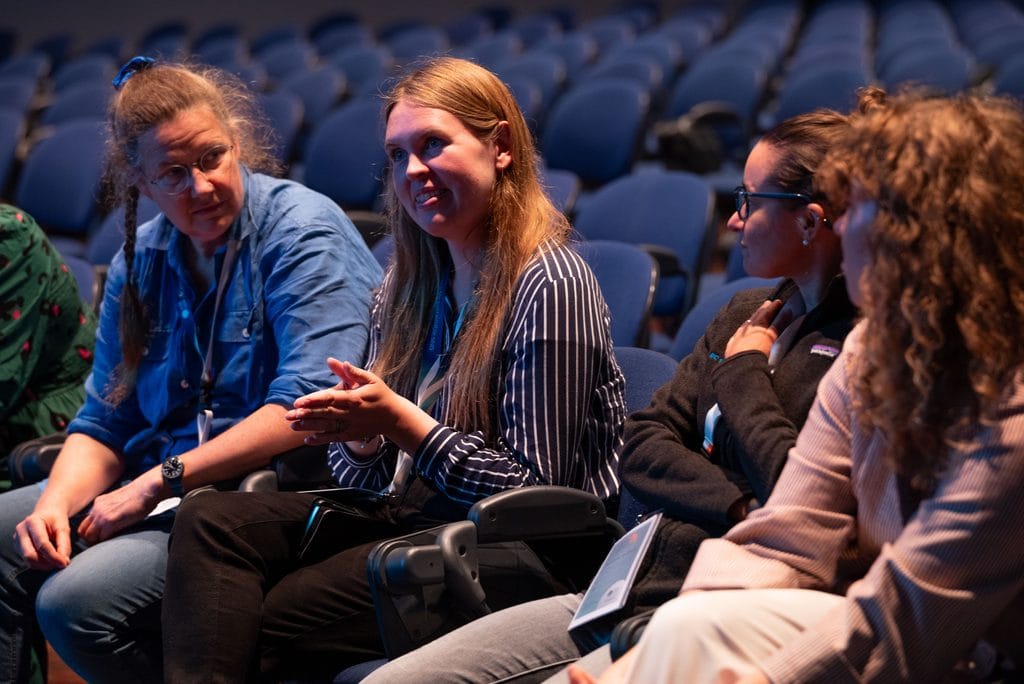
Feedback across all four presentations and the network session was very positive. The discussions raised at ASC 2026 will feed directly back into the NiD4OCEAN consortium’s ongoing work. They will help sharpen the project’s thinking on where, when and how nature-inclusive designs can support both biodiversity and decarbonization goals.
Once again, the ICES Annual Science Conference proved to be an important venue for exchanging ideas on offshore renewables, socio-ecological interactions and nature-inclusive design. The team extends its thanks to the organisers and the ICES Working Groups who made the conference possible.
With thanks to the Network Session conveners, Clémentine Mitoyen, Caryl Benjamin, Ellen Johannesen and Juan Pardo and to everyone who took part in the discussions.