
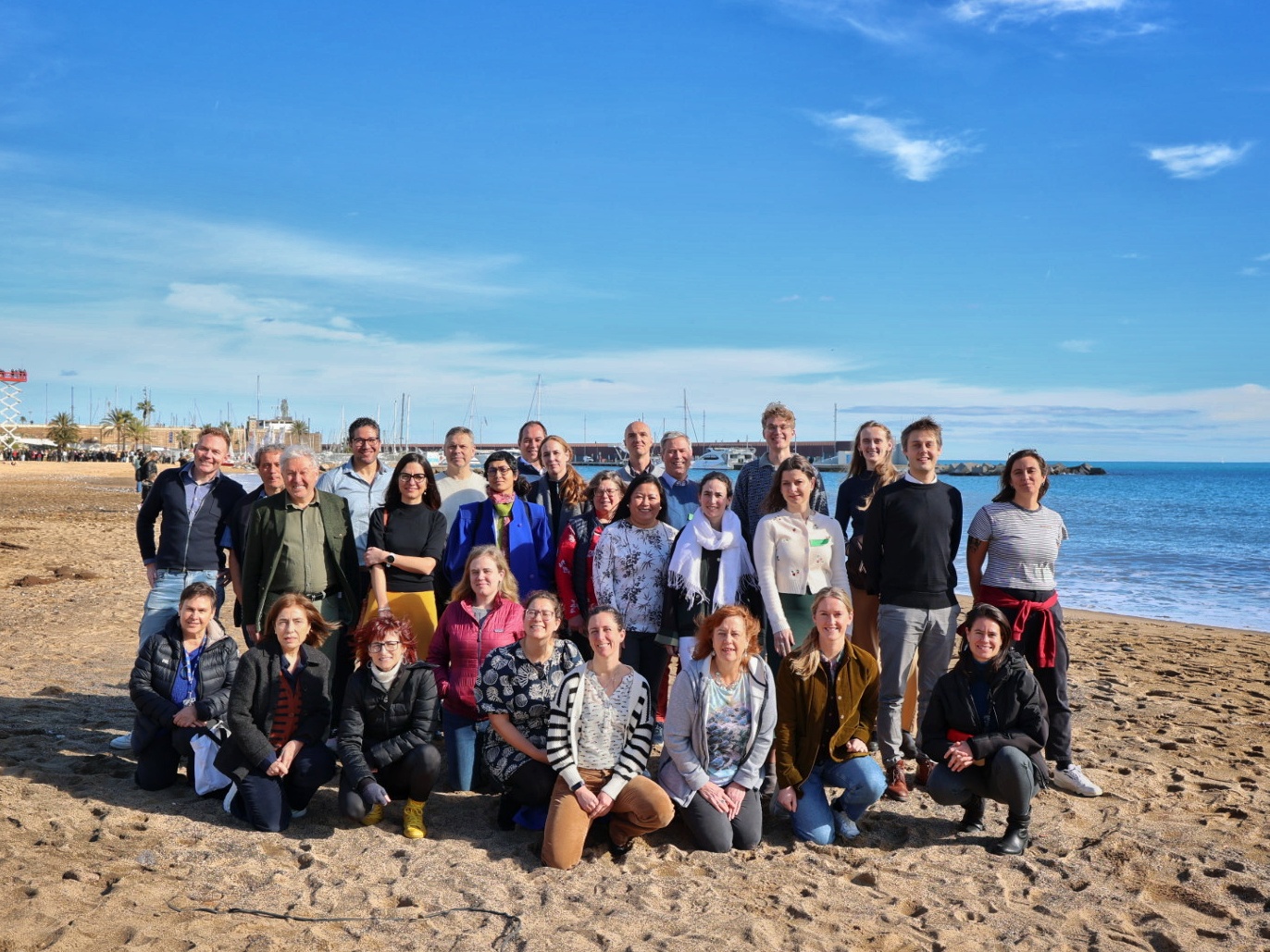
After more than a year of committed work and steady progress across all work packages, the 4th NiD4OCEAN Consortium Meeting brought project partners together in Barcelona for three days of focused discussions on progress and next steps. Hosted at the Institut de Ciències del Mar (ICM‑CSIC), on 28–30 January 2026, the meeting offered a valuable moment to take stock of the project’s evolution.
Partners reviewed progress on key project elements, including the development of the online catalogue of NiDs, ecological metrics, socio‑economic and policy frameworks, and the co‑creation of the industry‑facing Decision Support Tool (DST) planned for later in the project.
Dedicated workshops, including a session on impact indicators and a cross-work-package discussion on modelling approaches, supported coordination of methodologies and helped ensure that project outputs remain robust and comparable. These exchanges contribute to a shared scientific basis for assessing NiD effectiveness at local, regional, and basin scales.
Engaging with advisors
A highlight of the meeting was the participation of the project’s Scientific Advisory Board, whose members provided constructive guidance on how to reinforce synergies between activities and increase coherence across work packages. Their contributions supported partners in ensuring that NiD4OCEAN continues to advance in step with international best practices and with the broader ambitions of the EU Mission “Restore our Ocean and Waters”.
Recharged and ready for the next steps
Alongside the core programme, partners explored elements of Barcelona’s maritime heritage, including an evening visit to the Maritime Museum, and a consortium dinner, strengthening the ties within the multidisciplinary partnership.
NiD4OCEAN thrives on the diversity of its consortium, spanning research institutes, industry, NGOs, SMEs, and standardisation actors. This meeting reaffirmed the value of working side by side to create practical, evidence‑based solutions that reconcile offshore renewable expansion with ocean protection.
A warm thank you goes to Institut de Ciències del Mar (ICM‑CSIC) for hosting and to all partners for their active engagement and collaborative spirit.