In October, the waters of the Gulf of Lion in the Western Mediterranean became the unlikely classroom for the NiD4OCEAN University Challenge at UPC. Students were tasked with a daring experiment: design Floating Offshore Wind Turbines that not only harness the power of the sea but also nurture the life within it. Anchors and mooring chains, usually seen as industrial necessities, were reimagined as tools to support marine biodiversity.
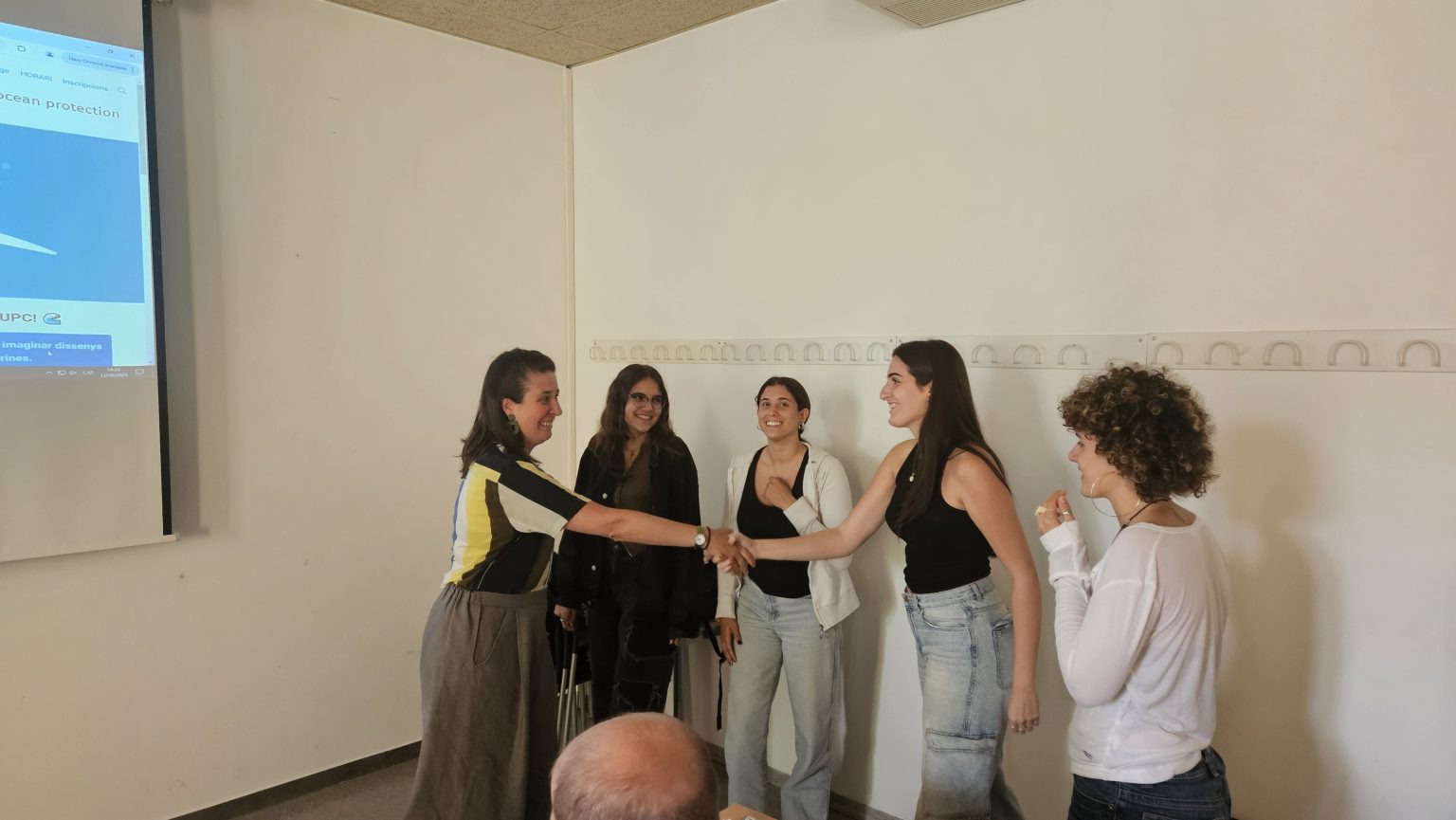
The winning concept, BioRing, was developed by four UPC students: Irene Gil, Mariona Martínez, Ariadna Cuevas, and Paula Carreras. Their design rethinks mooring systems as both sustainable engineering solutions and habitats for marine life.
We spoke with the team to learn how they experienced the NiD4OCEAN University challenge firsthand and what ideas, discoveries, and inspiration they are taking forward into the future of nature-inclusive offshore energy.
How did you find out about the challenge and decide to participate?
Paula: We’re all studying Marine Science and Technology at the Polytechnic University of Catalonia, though we are in different year groups. We ended up in the same Renewable Energies module, which gave us the chance to take part in the challenge. Actually, it was Irene who signed up first. She wanted to swap a normal practical assignment for something more hands-on and innovative.
Irene: I found out through an email about the project. When I first read the email, I thought, “Wow, that’s interesting.” I wanted to take part. It looked really cool and like a great learning opportunity. I signed up and asked Paula, Adriana and Mariona if they were going to join, and that is how the group came up to be.
And had you come across concepts like Nature Inclusive Design before, or was this all new to you?
Adriana: We had heard of it before, but I personally did not know the details.
Irene: No, not on my side. I became familiar with it through this project.
What about the process? How did BioRing – your proposal – come about?
Irene: Yes, BioRing. We brainstormed several ideas as a group. One of our early concepts, was discussed with one of our lecturers, who was there to help us with questions, and he basically ruled it out. So, we had to start again. Paula then suggested developing a ring shape structure. From there, we kept refining it, adding small details and improvements until it eventually became the final BioRing concept.
And what does it do? What is the purpose of the ring?
Paula: Offshore wind structures use different types of anchoring systems on the seabed, and the upper section must remain clear for operations such as chains and maintenance. We initially wanted to place our structure on top of the cylinder, but we were told that would not be possible. So instead, we decided to wrap it around the structure. There was also a technical constraint. The top of the cylinder is coated with protective oxides, and placing anything there would not work because the coating would prevent marine life from settling.
Your goal is to attract species then?
Adriana: Exactly. It is like an artificial coral structure.
Paula: Yes, a reef. It provides shelter for different species and allows marine life to colonise an area where installing wind structures may damage the original habitat.
Adriana: We have not gone into detail yet about which species would attach to these artificial structures. I imagine mostly molluscs. We also discussed the possibility of seeding them with sponges.
And the BioRing itself, what is it made of?
Paula: A biopolymer. At the Institute of Marine Sciences, there is a structure that looks like a giant coral, a few metres wide and tall, designed to be installed on beaches in southern Spain. When I saw it, I thought, could we use that material? If they are implementing it, then it clearly works.
Did you think you had any chance of winning?
Irene: Not at all. When we saw the master’s students and the other teams, it felt like they were operating at a much more advanced level.
And how do you feel about going to WindEurope 2026 to present your idea?
Mariona: Excited. It is a bit nerve-wracking to present, but there are so many networking opportunities. It feels very useful for our future careers.
Paula: I am especially interested in sustainability and marine biodiversity. Even if I do not end up working specifically in offshore wind, I am drawn to projects that try to give life back to areas affected by human structures. Seeing that an idea like ours could be implemented is really motivating.
Adriana: It also feels like a glimpse into how real-world development works. You start to understand how research, regulations, and practical constraints all must come together.
Irene: Exactly. It is quite different from a standard university project. This feels much closer to real research and professional practice.